
CarParts.com
CarpartsAuto & Vehicles
4.71.46K Reviews
- Version
- 1.0.10
- Installs
- 500.00K
- Age Rating
- Everyone
Screenshots
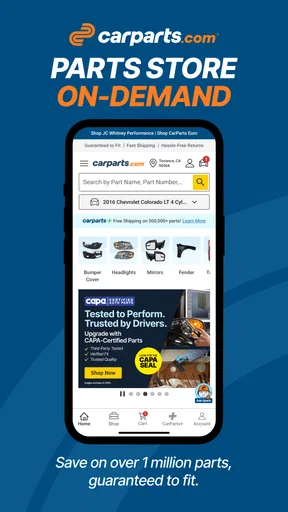
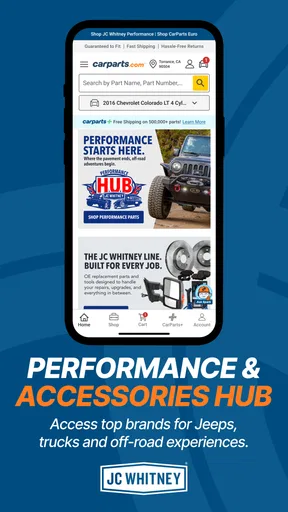
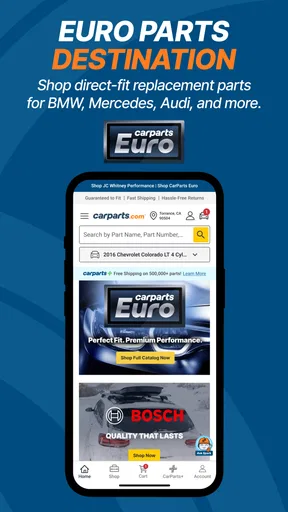
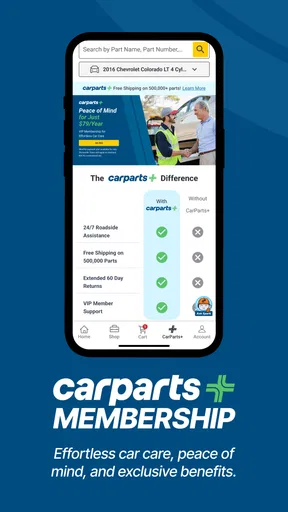

Our Review of CarParts.com
 Analysis by Appyee
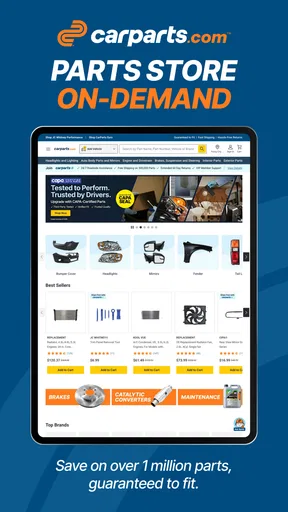
I used CarParts.com as a shopping companion for vehicle parts, and my first impression was that it is aimed at people who want to search a very large catalog without starting from a physical parts counter. It belongs to the Auto & Vehicles category, comes from Carparts, and is free to install. The app’s central promise is simple: bring a broad selection of replacement and maintenance parts to a phone, then help shoppers narrow the choice to something intended for a particular vehicle.
That sounds straightforward, but buying car parts is rarely as simple as buying an ordinary household item. A brake component, filter, mirror, sensor, or body panel can look correct in a product image and still be wrong for a specific trim or production configuration. My experience with CarParts.com is therefore less about browsing attractive listings and more about whether the app makes the identification process manageable. It is most useful when I treat it as a research and fitment tool rather than as a substitute for understanding what my vehicle needs.
Using the catalog without losing track of fitment
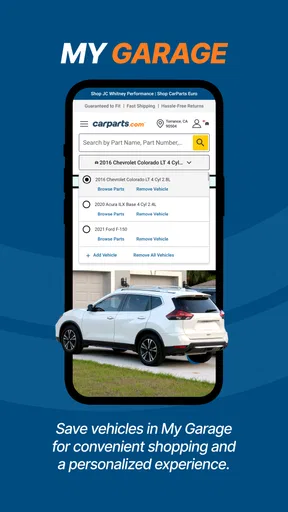
The app’s strongest practical idea is its focus on vehicle compatibility. A catalog described as containing over a million auto parts can easily become overwhelming, so the important step is to begin with the vehicle rather than with a vague search term. Selecting the correct make, model, year, and related configuration before comparing products is the habit that saves the most time. I would not rely on a picture or a familiar-sounding part name alone.
This matters especially for parts that changed during a model’s production run. Two vehicles that share a badge may use different connectors, dimensions, mounting points, or engine-related components. When I shop through a general marketplace, I often have to compare several listings and interpret seller notes myself. CarParts.com is more focused on the vehicle-parts problem, which makes the search feel less like sorting through unrelated marketplace results.
My preferred workflow is to identify the vehicle first, search by the actual repair or maintenance need, and then open several matching listings before making a decision. I look at the product description, the displayed compatibility information, and any notes about position or configuration. I also keep the original part nearby when possible. That last step is useful for visual comparison, but it should support—not replace—the vehicle fitment information.
Fitment should be treated as a checkpoint, not a guarantee that removes all responsibility. Even when an item is presented as compatible, I would still verify whether the vehicle has a particular engine, body style, sensor arrangement, or left- and right-side distinction. This is one of the less obvious lessons of using a large catalog: the app can reduce the number of wrong candidates, but it cannot know about every modification or unusual repair history on a vehicle.
Where the free price helps
The app itself is free, which makes it easy to keep available for occasional repairs without committing money before I know whether it will be useful. That free access has real value for drivers who normally begin with a web search and want a more vehicle-focused way to compare parts. It also makes sense for someone who wants to check availability or part categories before deciding whether to handle a repair personally or ask a mechanic.
Free access does not mean the parts themselves are free, so I separate the cost of using the app from the cost of completing a purchase. The app removes an entry fee, but the final value still depends on the selected component and the full checkout terms shown for that order. I would compare the complete purchase cost rather than judging a part by its displayed item price alone. For a repair involving several components, that distinction can make a bigger difference than a small variation between individual listings.
I also like the fact that the app does not force me to buy simply because I opened it. A sensible use is to research first: identify the likely part category, compare compatible options, and then decide whether the price and repair plan make sense. If a local supplier can provide the same needed component sooner, the app can still serve as a reference point rather than becoming the only place I shop.
What the large selection changes in practice
A very broad catalog is helpful when the part is ordinary but the vehicle is older, less common, or configured in a way that makes local stock uncertain. Instead of calling several stores immediately, I can use the app to understand what type of replacement is associated with the vehicle and see whether there are multiple possible choices. That is particularly useful during early research, when I know the symptom but not the exact part name.
There is a trade-off, though. More listings create more decisions. A new buyer may see several products that appear interchangeable and assume the cheapest one is automatically the best choice. I would resist that shortcut. The right comparison is not only price; it is also the exact position on the vehicle, the relevant specification, the stated fitment, and whether the part matches the repair plan recommended by a qualified person.
One practical technique is to write down the original part number, if it is visible, before opening the app. Searching with that identifier can be more precise than searching with a symptom such as “car making noise.” If I do not have a part number, I use the vehicle selector first and then narrow by the repair area. This reduces the chance of choosing a visually similar component from a neighboring vehicle configuration.
A realistic everyday repair scenario
Imagine noticing that a front exterior light is damaged before a commute. I would first select the vehicle, then search for the relevant lamp or housing, and pay close attention to whether the listing is for the left or right side and whether it covers the complete assembly or only a replaceable portion. A photograph may show the general shape, but the position label and fitment details are what I would use to make the decision.
If I find several compatible-looking results, I would not immediately choose the first one. I would compare the descriptions and check whether the item is intended for the exact vehicle configuration. I would also decide whether I need a complete assembly or merely a bulb or smaller service part. This workflow is slower than buying from a nearby shelf, but it is faster than ordering the wrong housing and discovering the mistake during installation.
For a simple maintenance job, the same approach applies. I would use the vehicle information to narrow the search, confirm the part category, and then compare the available choices. If the repair requires specialized tools, calibration, or safety-critical installation, I would use the app to identify the component but leave the final work to a mechanic. The app is useful in that situation because it helps me participate in the conversation without pretending that catalog browsing is the same as professional diagnosis.
How it compares with the usual alternatives
The most obvious alternative is a general online marketplace. Those services may offer familiar checkout experiences and many unrelated products, but their vehicle searches can mix incompatible items, third-party descriptions, and inconsistent terminology. CarParts.com is more narrowly focused, so I find the vehicle context more central to the shopping process. That focus is its main advantage over a broad marketplace.
A local parts store has a different strength: immediate human assistance and, in some cases, same-day availability. If my vehicle is needed for work tomorrow or the repair is urgent, the local option may be better even if the app offers a wider selection. A store employee may also help interpret a part number or identify a basic maintenance item while I am standing at the counter.
A mechanic or dealership remains preferable when the problem is uncertain, the vehicle has unusual modifications, or the part affects systems that require testing or programming. The app can make me a better-informed customer, but it does not replace diagnosis. I would be especially cautious about using an online catalog as the sole basis for steering, braking, restraint, or electronic-control work.
Compared with a manufacturer-specific parts portal, the app may feel more convenient for comparing a wider range of replacement possibilities. The manufacturer route can be preferable when I need an original component, an exact factory reference, or guidance tied closely to a particular vehicle system. The better choice depends on whether I value broad shopping convenience or exact manufacturer sourcing.
Small habits that improve the experience
The first habit is to save the vehicle details somewhere outside the shopping session. If I regularly maintain more than one vehicle, I keep their identifiers separate and avoid assuming that a search result for one car applies to another. This sounds obvious, but it prevents a common mistake: opening the app to buy a familiar item and forgetting that the vehicle selected earlier was different.
The second is to distinguish a component from a kit or assembly. A listing can represent one item, a pair, or a larger repair group, and the title alone may not communicate the practical difference clearly enough for a rushed buyer. Before ordering, I check exactly what I expect to receive and whether the repair requires related hardware. This is where careful reading delivers more value than simply using the broad catalog.
The third is to use the app before the vehicle is disabled. I would rather research a likely maintenance need in daylight than try to identify a part while the car is already stranded. Even if I ultimately buy locally, the advance search gives me vocabulary, likely part categories, and a better idea of what information a mechanic or store employee will need.
A fourth useful habit is to photograph the old part and its connectors before removal, without treating the photograph as proof of compatibility. The image can help me compare orientation and mounting details when reviewing listings. It is particularly useful for left-versus-right body parts or components with several similar-looking plugs. Still, I would use the app’s vehicle-specific information as the primary filter.
Who will get the most value
CarParts.com is a good fit for drivers who prefer to research independently, maintain an older vehicle, or want a broader parts search than a nearby store can provide. It is also useful for people who already know the repair area but want to compare compatible replacements before spending money. Because the app is free, there is little downside to trying it as a secondary shopping tool.
It can also help a careful beginner become more involved in routine ownership. Someone who is not ready to install a part personally can still use the app to understand what a repair might involve and to ask a mechanic more precise questions. That can reduce the feeling of being completely dependent on whichever part a shop happens to have on hand.
I would be more cautious recommending it to someone who wants a guaranteed diagnosis from a symptom description. A catalog can show parts associated with a problem, but several different faults can produce the same warning light, noise, leak, or performance change. If the user is likely to order based on the first plausible result, the app’s large selection may create more risk than convenience.
It is also not my first choice for an emergency repair where delivery timing is decisive. A local store, roadside service provider, or repair shop may solve the immediate problem more effectively. Likewise, owners of heavily modified vehicles should verify compatibility with extra care, because standard vehicle selection may not reflect non-factory changes.
What I would check before placing an order
I would begin with the vehicle selector and confirm every detail I can identify, including the body style or engine-related distinction when the app presents one. Then I would read the full listing rather than relying on the product image. I would check whether the item is for a particular side or position, whether it is a single component or a larger assembly, and whether the description matches the repair instruction I received.
Next, I would compare at least two plausible listings without assuming that the lower price is the better value. If one option appears unusually different, I would investigate the specification instead of treating the difference as a bargain. I would also keep the part number or listing details available until the repair is complete, especially if the vehicle cannot easily be driven back to a store for an exchange.
The app’s current version is 1.0.9, and it supports devices running Android 7.0 or later. That makes it accessible to people using older Android hardware, although the practical experience will still depend on the phone and network connection. The content rating is Everyone, so the app is positioned for general audiences rather than a specialized professional age group.
Its public reception is encouraging: it holds a 4.7 average from around seventeen thousand ratings, with about one thousand three hundred written reviews, and has passed five hundred thousand installs. Those figures suggest that the app has attracted a substantial user base, but they do not remove the need to verify an individual part. A high average rating tells me the overall shopping experience works for many people; it does not confirm that every listing will suit my particular vehicle.
My value judgment
The value here comes from combining free access with a purpose-built parts catalog and vehicle-oriented searching. I do not have to pay to explore the catalog, learn the terminology, or compare possible replacements. That is meaningful for occasional owners who may only need the app a few times a year. The benefit is strongest when the app helps prevent wasted time or an incorrect order.
That value is less obvious when I already have a trusted local supplier, need a part immediately, or require expert diagnosis. In those situations, the app may still be informative, but it is not necessarily the fastest or safest route to a completed repair. I see it as a flexible research and purchasing option, not as a universal replacement for local service.
My final recommendation is to try CarParts.com if you want a free way to investigate replacement parts and you are willing to verify fitment carefully. I would recommend it most strongly for planned maintenance, comparison shopping, and repairs where the vehicle details are known. I would skip relying on it alone for urgent breakdowns, modified vehicles, or safety-critical work that has not been professionally diagnosed.
In short, CarParts.com earns its place as a practical vehicle-parts reference and shopping app. Its broad selection is useful, its free access lowers the barrier to research, and the fitment-focused approach is more relevant than a generic marketplace for many car owners. The trade-off is that the app gives me more responsibility, not less: I still need to identify the correct vehicle, read the listing closely, compare the complete purchase value, and know when a mechanic or local store is the better choice.
Privacy and Permissions
See what permissions an app requests and how it handles your data.
- Photos/Media/Files
- read the contents of your USB storage, modify or delete the contents of your USB storage
- Storage
- read the contents of your USB storage, modify or delete the contents of your USB storage
- Camera
- take pictures and videos
- Other
- view network connections, full network access, control vibration, prevent device from sleeping
Verdict
Strengths of CarParts.com
- Extensive catalog covering parts for many vehicle makes and models.
- Vehicle fitment tools help narrow results to compatible components.
- Online ordering is convenient for home delivery or pickup options.
- Product listings often include photos, specifications, and customer reviews.
- Useful for finding maintenance parts without visiting multiple stores.
Limitations of CarParts.com
- Fitment information may still require checking your vehicle’s exact specifications.
- Shipping times can vary, especially for oversized or less common parts.
- Returns may be inconvenient when parts are ordered incorrectly.
- Some listings may have limited reviews or incomplete product details.
- Availability and prices can change quickly for popular replacement parts.
Similar Picks in This Category
View All
Android Auto
Google LLC4.1

maxim — order a taxi & food
PT. SITO4.7

Штрафы ГИБДД: проверка с фото
Pays LLC – Штрафы ГИБДД4.7

Номерограм – проверка авто
Авто Ассист4.8

Дром Авто
Дром4.9

Frequently Asked Questions
What is CarParts.com?
CarParts.com is an online shopping platform focused on replacement and maintenance parts for cars, trucks, and other vehicles. The app and website allow you to search by vehicle year, make, and model, browse categories such as brakes, lighting, body panels, and engine components, compare product details, and place orders for delivery. It is mainly designed for drivers, DIY mechanics, and repair professionals.
How do I know whether a part will fit my vehicle?
Before ordering, use CarParts.com’s vehicle selector and enter the correct year, make, model, and trim of your vehicle. The platform then filters compatible products, although fitment information should still be checked carefully. Compare the listing with your original part, review notes about engine size or body style, and confirm the part number when available. For uncertain purchases, professional advice is recommended.
Can I return an item purchased through CarParts.com?
CarParts.com generally provides a return process for eligible products, but the exact conditions depend on the item, order status, and reason for return. Parts may need to be unused, uninstalled, and returned with their original packaging, while special-order, electrical, painted, or clearance items may have different restrictions. Check the current return policy before purchasing and contact customer service if the part is damaged or incorrect.
How long does CarParts.com shipping take?
Shipping time depends on the product’s availability, warehouse location, destination, and delivery option selected during checkout. Many common parts may ship quickly, while oversized body components, special-order products, or items coming from different facilities can take longer. The estimated delivery date shown at checkout is the best reference. It is also wise to inspect the package promptly for damage when it arrives.
Is CarParts.com suitable for beginners who do not know much about car repairs?
CarParts.com can be useful for beginners because its vehicle-selection tools, product categories, photos, specifications, and fitment information make browsing easier than searching through generic marketplaces. However, the app does not replace a repair manual or qualified mechanic. Installing the wrong component can create safety risks, especially with brakes, steering, suspension, and electrical systems, so beginners should verify compatibility and seek professional help when necessary.
